
Lightning vs USB-C: Which iPhone Cable Do You Actually Need?
By TezKhareed Team · Updated 5 September 2026
Buy the wrong cable and it either doesn't fit or silently trickle-charges your phone at 5W. Which port your iPhone has decides everything else — here's how to check it in ten seconds and buy once.
Check your port, not your iPhone's age
Apple ran Lightning for over a decade, then switched to USB-C. The line isn't where most people expect:
| iPhone | Port | Cable you need |
|---|---|---|
| iPhone 15 and later | USB-C | USB-C to USB-C |
| iPhone 8 through 14 (and 14 Plus/Pro/Pro Max) | Lightning | USB-C to Lightning |
| iPad (2018 or newer, most models) | USB-C | USB-C to USB-C |
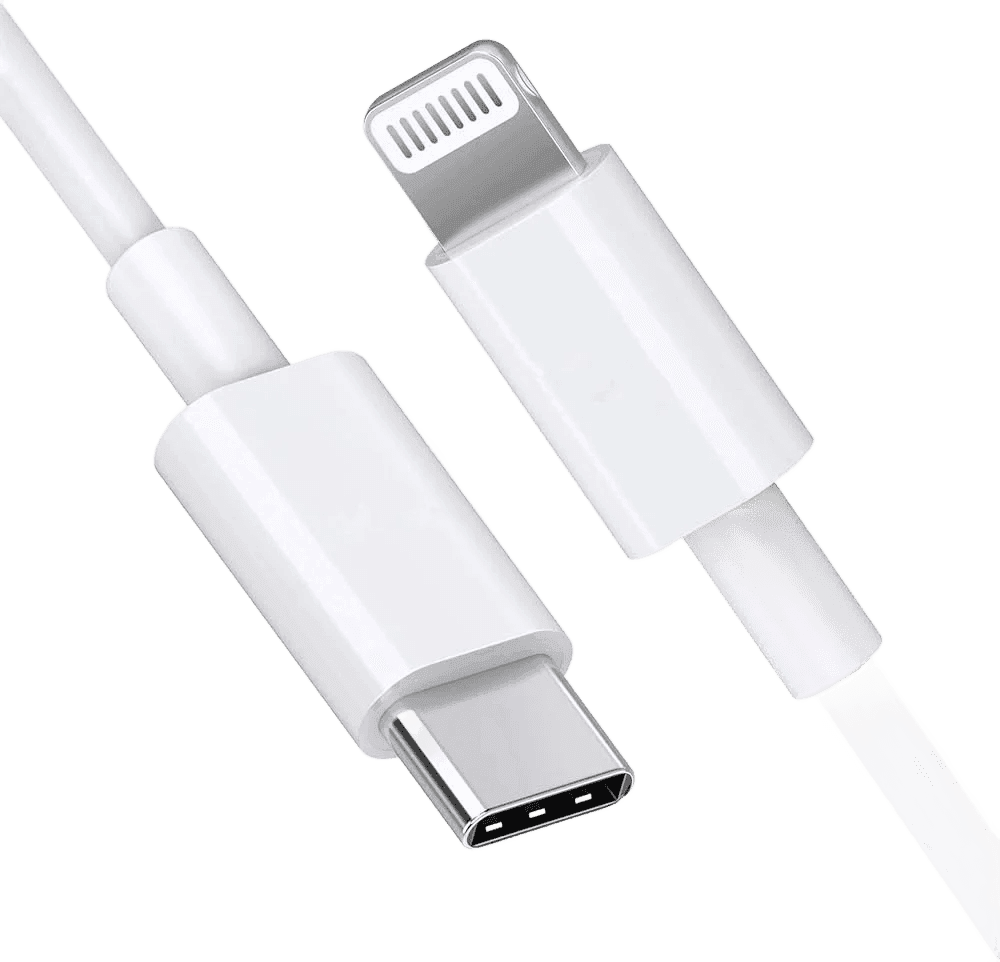
If you're not sure, look at the port itself: Lightning is a flat, wide slot; USB-C is a small oval that's the same shape upside down. That's the whole test.
Why an MFi cable matters more on Lightning
USB-C to USB-C is an open standard — almost any well-made cable works. Lightning is different: Apple's chip inside a certified (MFi) cable is what tells the phone "charge and sync normally." A non-certified Lightning cable will often still charge, but slowly, and eventually throws the "This accessory may not be supported" warning and refuses to charge at all after an iOS update.
There's no visual way to tell a certified cable from a knockoff — the giveaway only shows up as that warning, weeks or months after you've bought it. Buy Lightning cables from a seller who states MFi certification, not just "for iPhone."
Speed: cable matters as much as the charger
A USB-C to Lightning cable rated for 20W Power Delivery is what actually uses a fast charger's output — an iPhone 12 or later goes from flat to roughly half in about 30 minutes on one. The white cable that used to ship in the box was rated for 5W; pairing a 20W charger with that old cable still charges at 5W, because the cable is the bottleneck, not the wall adapter.
For USB-C iPhones (15 and later), the same rule most Android buyers already know applies — see which cable you need for fast charging for the 3A vs 5A / E-marker breakdown.
Quick buying rule
- iPhone 8–14 series: one MFi-certified USB-C to Lightning, 20W PD cable covers charging and syncing. Braided jackets last far longer than the stock cable under daily bag wear.
- iPhone 15 and later, iPad: a standard USB-C to USB-C cable — no MFi chip needed, any 3A-rated cable charges normally.
- Mixed household: keep one of each rather than an adapter — Lightning-to-USB-C dongles are one more thing to lose and a common point of failure.
Our USB-C to Lightning PD Cable (1m) is MFi-certified, rated for the full 20W PD profile, and nylon-braided for 10,000+ bend cycles — built for exactly the 8-through-14 series above.
Browse charging cables or charging cables in Pakistan for the full range. Bank transfer with fast nationwide delivery.
Frequently asked questions
Does my iPhone use Lightning or USB-C?+
iPhone 15 and later use USB-C. iPhone 8 through 14 (including the 14 Plus, Pro and Pro Max) use Lightning — a wider, flatter port than USB-C.
Why does my Lightning cable say "accessory may not be supported"?+
The cable is not MFi-certified. It may still charge slowly, but iOS updates increasingly block uncertified Lightning accessories outright.
Part of our Charging Cables guides.